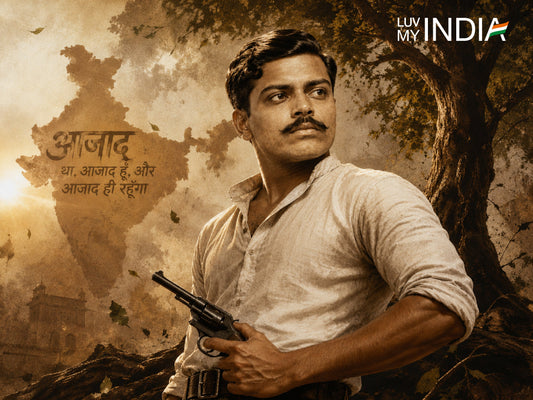
The noose tightened on 2 July 1934, and the boy it claimed was barely nineteen. He stood straight despite the atrocities he faced. Those who witnessed the execution said his lips moved in silent prayer to the motherland; others swear he smiled, as though certain that his death would nourish a freedom he would never live to taste. A few hours later, the British authorities hurried his body into an unmarked grave, hoping the world would forget both the rebel and his name.
Born on 4 April 1915, Asitranjan Bhattacharyya grew up in an India where every person was treated a subject, not citizen. It was a world that jailed poets for dreaming aloud. From an early age, he understood that some battles are fought not for reward but for dignity; so he embraced anonymity, shielding his family from reprisals while he inched closer to the underground flames of revolution.
This blog is Luv My India’s humble salute to that forgotten flame. He died without headline or memorial; we write today so that your heart may beat a little faster at his story and carry it forward—into classrooms, boardrooms and living-room conversations—where it should have lived all along.
Asitranjan Bhattacharyya came of age in a Bengal already crackling with agitation. The echoes of Khudiram Bose, the clandestine meetings of Anushilan Samiti and the whispered names of Surya Sen; he absorbed tales of bravery the way other teenagers absorbed cricket scores.
He was secretive but his anonymity could not mask audacity. On 31 March 1933, a meticulously planned dacoity shook the usually quiet Habibganj. It was no ordinary robbery. Witnesses recalled a slim youth directing the operation with calm urgency, ensuring no civilian was harmed, insisting the frightened shopkeeper keep a small sum “for the troubles of swadeshi.”
In less than fifteen minutes, the squad vanished into the forests, leaving the Beitish authority punctured and the colonial press howling for reprisals. Asit was captured weeks later after an informer betrayed a safe house.
During interrogation he gave no names; during trial he gave no excuses. The Crown Prosecutor emphasised his age, calling him “a dangerous child intoxicated with sedition,” but the judge sentenced him death. It is said that when the verdict was read, Asit bowed slightly, as though acknowledging a referee’s whistle in a game whose rules he had already rejected.
Why, then, do so few remember him? Part of the answer lies in his own success at secrecy; he left historians little to catalogue. Part lies in Partition: Sylhet, once Bengal, became another country with prison archives scattered. Part lies in our collective tendency to spotlight giant figures while the foot soldiers fade into the footnotes.
We lose perspective when we forget how a teenager chose the gallows so that future teenagers could choose their careers, their votes, their freedom. We lose the cause when we celebrate freedom anniversaries without acknowledging those who never saw the fireworks.
This is a tribute to a forgotten hero, executed on July 2, 1934, at just 19 years old. His bravery is buried in footnotes, overshadowed by mainstream history. But his story lives on, especially through people keeping his flame alive.
Because memory, like freedom, thrives on repetition. Tell his story at your dining table; slip his date of martyrdom into your calendar. One day, perhaps, a school quiz will ask, “Who was Asit Ranjan Bhattacharyya?” and every hand will rise, confident, proud.
Tags:
Previous
Luv My India’s tribute to Bankim Chandra Chatterjee’s legacy
Next
Luv My India’s salute to Pingali Venkayya