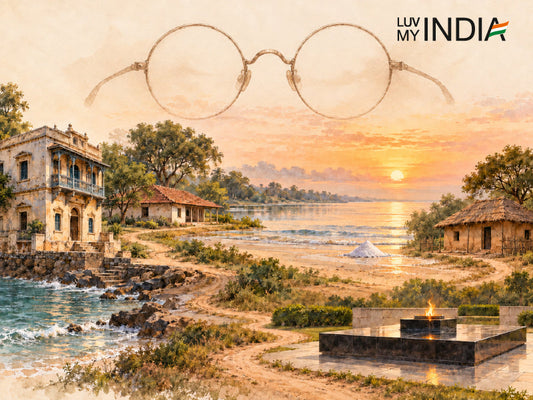
In a time when obedience was expected and silence was rewarded, he chose resistance. He believed that freedom was not a gift to be requested politely but a right to be claimed boldly. He stood for Indian pride when humiliation had become routine, for Indian courage when fear was cultivated deliberately and for Indian self-respect when submission was made to look like survival. His life was a reminder that empires do not fall because they are challenged by armies alone, but because they are challenged by conscience.
Ram Prasad Bismil was not just a name but also a flame that burned fiercely enough to light the path of freedom for generations. And when the moment demanded everything, he gave his life without hesitation.
Born in 1897 in Shahjahanpur, he grew up witnessing the everyday cruelty of colonial rule. From a young age, he was deeply affected by stories of oppression of Indian dignity. Unlike many who accepted this reality as fate, Bismil questioned it. Patriotism, for him, was not abstract—it was deeply personal.
Bismil’s journey into the freedom struggle was driven by both action and thought. He believed that words alone could awaken people, but action was necessary to shake an empire. This belief led him to join revolutionary organisations such as the Hindustan Republican Association (HRA), which later became the Hindustan Socialist Republican Association (HSRA). The goal was clear: to overthrow British rule and establish an India where Indians governed themselves with dignity and justice.
One of Bismil’s most defining contributions was his role in the Kakori incident of 1925. The British administration relied heavily on Indian wealth to sustain its machinery of control. Bismil and his fellow revolutionaries decided to strike at the economic backbone of the Empire. The train robbery near Kakori was one such act of resistance.
This incident was followed by arrests, trials and the stubbornness of British to make an example of him. Yet even in captivity, Bismil remained unbroken. During the trial, he stood with dignity, unafraid of the consequences. He did not plead for mercy. Instead, he defended the righteousness of his actions, stating clearly that his fight was not against individuals but against injustice.
Beyond revolutionary action, he was a poet, a writer and a thinker too who used words as weapons. His poems were soaked in patriotism. Verses like “Sarfaroshi ki tamanna ab hamare dil mein hai” ignited courage. These words became the heartbeat of the revolutionary movement, whispered in secret meetings and shouted in moments of defiance.
When Ram Prasad Bismil was sentenced to death, the nation mourned, but he did not. He faced the gallows, convinced that his sacrifice would strengthen the struggle he would not live to see completed. He believed that even if individuals perished, the idea of freedom could never be executed. And history proved him right.
The execution of Bismil was meant to instil fear. Instead, it produced resolve. His martyrdom inspired countless young Indians to join the freedom movement with a determination. He became proof that courage could outlive the body and that sacrifice could outshine oppression. The British may have silenced his voice, but they amplified his message.
In independent India, the importance of figures like Ram Prasad Bismil cannot be overstated. Freedom did not arrive gently; it was built out by people who were willing to lose everything so that future generations could live with dignity.
Even today, when India stands free, the values. Independent India exists because people like Bismil believed it was worth fighting for. The responsibility of preserving that freedom now rests with those who remember their stories and live their values.
Luv My India proudly celebrates the legacy of Ram Prasad Bismil as a revolutionary and a symbol of fearless Indian pride. His life represents love for the motherland, courage in the face of adversity and dignity rooted in action.
We celebrate Ram Prasad Bismil because he reminds us that freedom is never accidental.
We celebrate him because Indian pride was defended by people who refused to kneel.
And we celebrate him because his fire still burns in our history, in our conscience and in our love for India.
Tags:
Previous
JRD Tata, the man who built India with integrity
Next
This Is how pride looks like with Luv My India’s patriotic badges