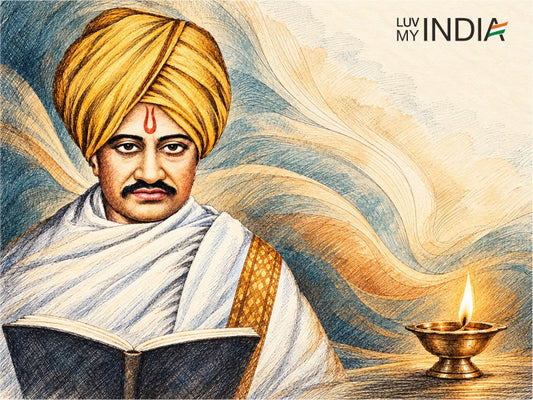
Before his time, elections in India were often treated as noisy, compromised and vulnerable to muscle power, money, intimidation and casual disregard for the rulebook. Democracy existed, but discipline did not.
Then came a Chief Election Commissioner who believed that democracy was not a suggestion, but a commandment. A man who believed that if the Constitution had entrusted him with power, it was his moral obligation to use each of it without any fear, favour or hesitation. When he arrived, the system didn’t welcome him. It braced itself.
What followed was a fear from democracy. Leaders panicked. Parties protested. Newspapers debated. Critics shouted. But voters watched an official who refused to be polite in the face of wrongdoing. This was not governance as usual. This was democracy being defended by sheer will. This was T. N. Seshan.
Tirunellai Narayana Iyer Seshan took charge as Chief Election Commissioner in 1990, inheriting an institution that had authority on paper but hesitation in practice. Seshan changed that equation completely.
A career civil servant with razor-sharp intellect and uncompromising ethics, he believed that the Election Commission was not a ceremonial body but the very spine of Indian democracy. From day one, he made it clear that elections were not political events; they were constitutional obligations. And anyone who disrespected them would pay a price.
The Model Code of Conduct before any election, long treated as a soft guideline, became a weapon of accountability under his watch. Posters vanished overnight. Loudspeakers were silenced. Convoys were stopped. Cash distribution was cracked down upon.
Seshan’s insistence on fairness extended to the smallest details. He monitored booth security, ensured voter rolls were cleaned up and took measures to prevent any malpractice. Elections were postponed if conditions were unfair.
This uncompromising approach made him wildly popular among citizens and deeply uncomfortable for politicians. Leaders who were used to bending systems suddenly found the system bending them back. It wasn’t uncommon to hear ministers accusing Seshan of arrogance, authoritarianism or publicity-seeking.
One famous anecdote involved a powerful chief minister who openly criticised Seshan’s strict enforcement of the code, calling him "khula saand” and “anti-political.” In another instance, a senior national leader accused Seshan of behaving like a “dictator.” Seshan replied that dictators cancel elections; he ensured they were fair.
A third criticism came when multiple parties jointly complained that Seshan was delaying elections unnecessarily. His answer was blunt that democracy delayed was better than democracy destroyed. The elections were postponed, violence reduced and voter turnout increased.
Perhaps the most telling moment came when Chandrashekhar reportedly remarked that Seshan “ate politicians for breakfast.” Instead of denying it, Seshan embraced the phrase with quiet amusement.
Seshan’s tenure transformed the Election Commission into one of the most respected institutions in India. Voters began to trust elections again. Booth capturing declined. Money power faced resistance. The idea that elections could be fair stopped sounding naïve. International observers praised India’s electoral discipline. For the first time, democracy felt guarded.
The importance of figures like T. N. Seshan in a democratic country cannot be overstated. Democracies do not fail only because of bad leaders; they fail because good officials stop enforcing rules. Seshan proved that institutions are only as strong as the individuals who inhabit them.
In a country as large and complex as India, democracy survives not through perfection, but through vigilance. And vigilance requires discomfort. It requires men and women who understand that their loyalty is not to governments, but to the Constitution.
As India continues to evolve, the legacy of T. N. Seshan stands as a reminder that systems don’t protect themselves. People do. And that democracy is safest in the hands of those who refuse to compromise with convenience. At Luv My India, we celebrate T. N. Seshan because patriotism is not only found on borders or in battlefields. It lives in institutions and individuals who choose duty over popularity.
Tags:
Previous
How Jayaprakash Narayan became the beacon of hope in India’s darkest era
Next
JRD Tata, the man who built India with integrity