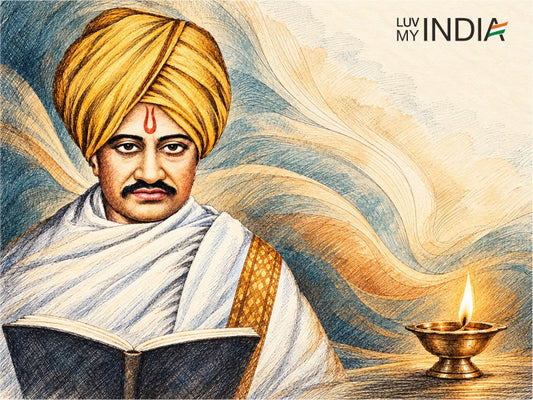
There are nights in a nation’s history that feel longer than time itself. The Emergency of 1975 was one such night. It fell without any warning, like a curtain brought down by an arrogant hand. Newspapers woke up voiceless, leaders vanished behind bars and ordinary people felt a strange. In those 21 months, India held its breath, unsure whether sunshine would ever come.
Families were told to stay in line. Students were told not to question. Journalists were told not to write. Entire cities seemed to walk in slow motion, careful not to offend the supreme leader. Radio carried only approved truths. Streets carried only quiet footsteps. A democracy built on courage and dissent found itself suddenly afraid of its own voice.
And then, in that heavy darkness, came a voice that refused to bow, refused to be bought, refused to forget that India belonged to its janta only. Jayaprakash Narayan, lovingly called JP, was not new to struggle. Long before he became the face of resistance during the Emergency, he had devoted his life to India’s freedom.
JP travelled to the United States for higher education, but instead of being dazzled by modern life, he found himself drawn to ideas of social reform, collective action and justice for the oppressed. He worked on farms, in factories and lived among labourers, shaping his understanding of human struggle. When he returned to India in 1929, the fight for independence was intensifying and JP stepped straight into it.
He joined the Congress party and quickly became one of its most promising young leaders. During the Quit India Movement of 1942, JP demonstrated a boldness that made him both admired and feared. He organised secret movements and coordinated resistance against British rule even when many senior leaders were imprisoned.
JP’s life after independence reflected his commitment to principles over power. He refused ministerial posts, turned down political office and instead dedicated himself to building a more just and equal India through social reform. This integrity made the nation call him “Loknayak,” meaning the leader of the people.
His deep connection with ordinary citizens led to one of the most iconic slogans in Indian political history: “Singhasan khali karo, ke janta aati hai!” It was more than a slogan; it was a roar. A declaration that power belongs to the people. A warning to those who forgot the meaning of democracy. When JP uttered those words, they echoed across India like a heartbeat synced with millions of others.
He led the historic Bihar Movement, which soon transformed into a national call for accountability. Students marched behind him. Workers rallied for him. Parents told their children about him.
When the Emergency was declared on June 25, 1975, JP was among the first to challenge it publicly. Even as censorship tightened, dissent was punished and surveillance grew, JP remained fearless. He spoke of a democracy that had been betrayed. The more they tried to silence him, the louder his influence became.
His speeches during this era ignited a new generation of leaders, many of whom would go on to shape Indian politics for decades. JP’s message was clear: democracy is not a gift; it is a responsibility. It belongs to the people, not to those who sit on the throne. And in 1977, when elections were finally held again, his philosophy proved victorious. The janta spoke. Power shifted. India reclaimed its voice.
Jayaprakash Narayan remains one of the rarest figures in Indian history as a leader who rose not through politics but through principles. And at Luv My India, we proudly celebrate JP’s legacy. We celebrate him because he taught us that democracy does not live in the parliaments but in the people who send leaders there.
Tags:
Previous
Remembering Kavi Pradeep, the poet who healed a wounded India
Next
T. N. Seshan, the man who made Indian democracy fearless