Some lives are so expansive that they feel less like individual journeys and more like eras. Long before India spoke the language of global business or corporate responsibility, one man was already living it, believing that success meant nothing if it didn’t make the country stronger.
He grew up between cultures, continents and possibilities, yet his heart chose one place with clarity. While the world offered him comfort, he chose commitment. While others chased profit, he chased purpose. And while many measured success in balance sheets, he measured it in futures built.
Jehangir Ratanji Dadabhoy ‘JRD’ Tata was a visionary whose idea of business was decades ahead of his time. Born in 1904, he inherited a legacy but never relied on it. Instead, he expanded it with discipline. Under his leadership, the Tata Group transformed from a collection of enterprises into a national institution. He believed that Indian businesses could match the best in the world by raising standards.
One of his greatest strengths was his ability to see opportunity in national need. At a time when India lacked industrial depth, he invested in steel, power, chemicals, engineering and technology sectors that would become the backbone of a modern nation. But no story captures his foresight better than aviation.
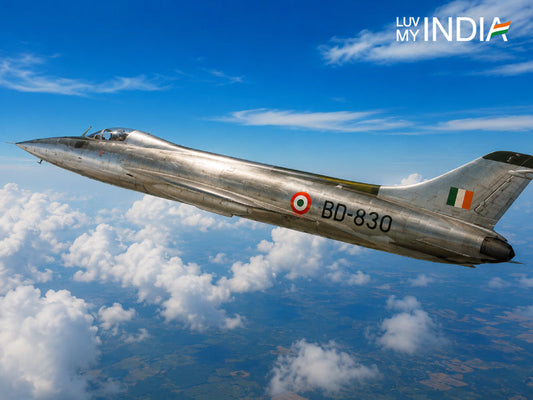
When flying was still a novelty and India barely had infrastructure, he dreamed of connecting the country through the skies. In 1932, he piloted the first commercial flight in India himself, carrying mail from Karachi to Mumbai and then to Chennai. That flight wasn’t just about transport but about aspirations. It laid the foundation for what would become Air India, a symbol of Indian pride on the global stage. For decades, Air India was among the finest airlines in the world, admired internationally and cherished domestically. It became a flying ambassador of India’s grace and capability.
Yet, one of the most painful chapters of his life came when Air India was nationalised in 1953. The airline he had built with vision, passion and personal involvement was taken away from him. He never publicly expressed bitterness, but those close to him knew the hurt ran deep.
Beyond aviation and industry, his ideas often translated into businesses that improved everyday life. Tata Motors’ early vehicles made mobility accessible to Indians. Tata Tea empowered farmers and communities. Tata Consultancy Services, born from his belief in technology and talent, would later become a global IT powerhouse.
His anecdotes are filled with moments that reveal his humanity. He personally responded to employees’ letters. He championed labour rights, introduced working-hour regulations and believed that people who felt respected would build better businesses.
As India liberalised and globalised, many new corporate giants emerged. Yet even among them, his legacy stood apart. He proved that capitalism could be compassionate, that growth could be inclusive and that success need not come at the cost of values. In an age where businesses are often judged by quarterly results, his life reminds us of the power of patience and principle.
When he passed away in 1993, India didn’t just lose an industrialist. It lost a moral compass. But his ideas did not die with him. They live on in every Tata enterprise that chooses ethics over expediency, in every employee treated with dignity and in every Indian who believes that business can and should serve the nation.
At Luv My India, we celebrate Bharat Ratna JRD Tata not just as a business legend, but as a patriot who believed that India deserved the very best, from its skies to its factories, from its workplaces to its global reputation.
We celebrate him because he showed India what excellence with ethics looks like.
We celebrate him because he believed Indian enterprise could inspire the world.
And we celebrate him because his legacy reminds us that true success is measured not in profit alone but in pride, purpose and progress.
Tags:
Previous
T. N. Seshan, the man who made Indian democracy fearless
Next
Luv My India’s tribute to Ram Prasad Bismil