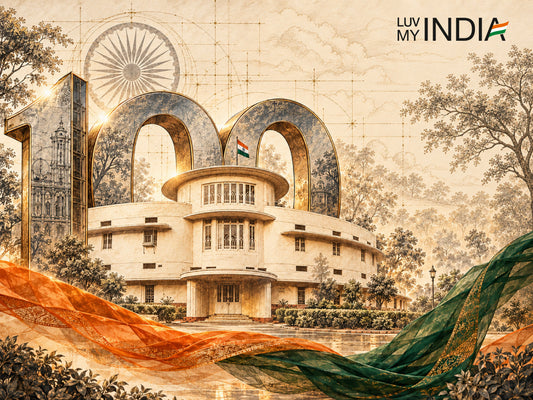
India does not arrive at the idea of becoming a developed nation overnight. The vision of Viksit Bharat 2047 is rooted in a clear milestone: 100 years of independence. By that time, the country aims to move beyond the label of a developing economy and establish itself as a nation that is economically strong, socially inclusive, technologically advanced, and environmentally responsible.
What defines this vision is its breadth. While becoming a leading global economy remains a central objective, the ambition extends beyond scale. India is working towards expanding its economic capacity to a level that places it among the world’s foremost powers, with projections pointing toward a multi trillion dollar economy by 2047. The true measure of this growth, however, lies in how meaningfully it improves everyday life.
The path to achieving this is layered and deliberate. Infrastructure forms the backbone, with sustained investment in roads, railways, airports, digital connectivity, and urban systems. At the same time, rural development remains equally important, ensuring that progress is distributed and not limited to metropolitan regions.
Human capital stands at the centre of this transformation. Education and healthcare are being treated as foundational priorities, recognising that long term progress depends on a capable and healthy population. Strengthening institutions, expanding access, and building skill readiness are essential to preparing a workforce that can meet the demands of a rapidly evolving economy.
Technology continues to act as a key enabler. India’s digital public infrastructure has already created scale and efficiency, and its deeper integration across governance, finance, agriculture, and healthcare is expected to enhance transparency, accessibility, and productivity across sectors.
There is also a clear emphasis on innovation and enterprise. Encouraging startups, strengthening manufacturing, and investing in research are critical to positioning India not just as a market, but as a creator of globally relevant solutions.
Sustainability remains integral to this vision. Economic progress is being aligned with environmental responsibility through a focus on renewable energy, cleaner cities, and responsible resource management. The objective is to ensure that growth is both progressive and sustainable over the long term.
Equally significant is the emphasis on inclusion. The advancement of youth, women, farmers, and economically weaker sections is closely tied to the country’s overall progress. Expanding access to opportunities and ensuring more equitable outcomes is essential to building a balanced and resilient society.
Even with these structural efforts in place, there is a clear recognition that transformation at this scale requires more than policy. It requires participation. Citizens, particularly the younger generation, are expected to contribute through ideas, innovation, enterprise, and responsible engagement.
This is where the role of mindset becomes critical.
A developed nation is ultimately shaped not only by its systems, but by the confidence and clarity of identity its people carry. When pride becomes a part of everyday life rather than a momentary expression, it begins to influence how individuals think, act, and contribute.
Luv My India, as India’s First Nationalist Lifestyle Brand, contributes to this shift in a manner that is subtle yet enduring. It repositions patriotism from an occasional expression to a continuous presence, not as display, but as lived experience.
By bringing Indian identity into everyday lifestyle through what people wear, the spaces they inhabit, and the choices they make, it fosters a deeper and more personal connection with the nation. Rooted in Indian craftsmanship and shaped through materials like Khadi, each creation reflects values of self reliance, cultural continuity, and conscious ownership of Indian identity.
This contribution operates beneath the surface, building alignment over time.
While Viksit Bharat will be realised through policy, infrastructure, and economic progress, its strength will ultimately rest on how strongly its people identify with it.
And that is shaped, quietly but powerfully, in everyday life.
Tags:
Previous
Naari Shakti: The Force Powering the Viksit Bharat Journey
Next
Delhi Takes a Step Forward with Its First All-Women Police Station