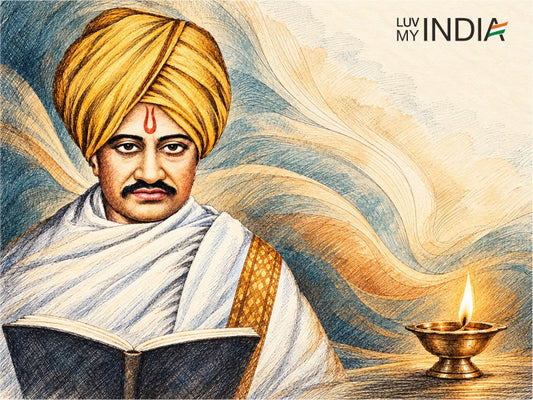
“Sarkaarein aayengi, jaayengi. Partiyaan banengi, bigdengi. Par yeh desh rehna chahiye, is desh ka loktantra amar rehna chahiye.”
When Atal Bihari Vajpayee spoke those words in Parliament during a moment of political uncertainty, the chamber fell into a rare silence. It was the kind of silence that only follows truth. Governments would come and go, he said. Parties would rise and fall. But the country and its democracy must endure.
Those words were not merely a political statement. They were a reminder of something deeper: the Indian Parliament is bigger than the governments that occupy it. It is not a stage for temporary power. It is the living theatre of India’s democratic soul.
To understand the legacy of the Indian Parliament is to understand how a nation of extraordinary diversity learned to argue, disagree, persuade and still remain united.
The Morning Democracy Found Its Voice
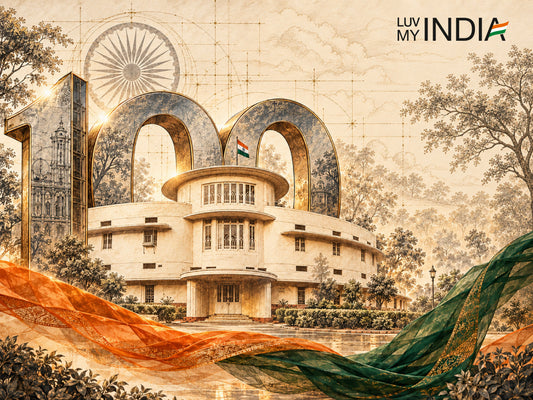
The story truly began on May 13, 1952, when the first session of India’s Parliament convened after the country’s first general elections. For the first time in history, representatives chosen by millions of Indians gathered under one roof to debate the future of a free nation.
The building itself had seen history of colonial councils, imperial decisions and debates under British authority. But that morning felt different. The air carried a sense of arrival.
Members of the newly formed Lok Sabha and Rajya Sabha entered not as subjects, but as representatives of a sovereign people. Many of them had spent years in prisons during the freedom struggle. Others had organised movements, led protests or walked through villages convincing citizens that their vote mattered.
From the beginning, the Indian Parliament became a place where ideas battled fiercely but within the discipline of democracy.
The early years saw towering figures shaping debates with conviction and intellect. Jawaharlal Nehru, India’s first Prime Minister, brought a rare blend of philosophy and pragmatism to parliamentary discussions. His speeches often travelled beyond policy, speaking of the responsibilities of freedom and the moral direction of the nation.
Nehru believed Parliament was not just a legislative body; it was a forum of conscience where India constantly redefined itself. Opposition voices rose just as strongly. Among them was Ram Manohar Lohia, whose fiery interventions challenged the government with intellectual sharpness.
Another extraordinary presence was Hiren Mukerjee, whose speeches were celebrated for their scholarly depth and moral clarity. His ability to combine history, philosophy and policy turned parliamentary debate into a form of intellectual art.
As decades passed, Parliament became known for something rare in modern politics. Speeches delivered in those halls often travelled beyond Delhi, reaching villages and cities through newspapers and radio broadcasts.
Few voices commanded attention like George Fernandes. Known for his fearless style, Fernandes often spoke with the urgency of a man who carried the struggles the underprivileged into the heart of national decision-making. Equally compelling was Pramod Mahajan, whose speeches were admired for their wit and sharp political insight.
Then there was Sushma Swaraj, whose voice in Parliament combined grace with formidable argument. Her speeches often transcended party lines, reflecting the dignity of parliamentary tradition even in moments of intense political disagreement. And of course, there was Atal Bihari Vajpayee whose pauses often spoke as loudly as his words.
Together, these voices created something unique: a culture of debate where language itself carried dignity.
The Indian Parliament does more than pass laws. Inside its chambers, India’s diversity finds representation. Unlike systems where authority flows from a single voice, India’s parliamentary system thrives on multiplicity. The Prime Minister speaks. The opposition responds. Committees deliberate. Members rise to represent constituencies thousands of kilometres apart.
Every major shift in India’s history, from development strategies to constitutional amendments, passed through the scrutiny of parliamentary debate. The process demonstrated something remarkable: India trusted dialogue over decree.
A Living Legacy
Seventy years after that first session in 1952, the Indian Parliament continues to evolve. New leaders emerge. New debates unfold. New challenges test the resilience of democratic institutions. Technology changes how proceedings are broadcast and understood. But the core spirit remains unchanged.
It is the spirit Atal Bihari Vajpayee captured in that unforgettable line that governments are temporary, but democracy must endure. Parliament survives because it belongs not to any single party or ideology, but to the people of India.
At Luv My India, this spirit of democratic pride resonates deeply. Just as Parliament reflects the diversity and unity of India, our creations celebrate the stories, symbols and ideals that bind the nation together.
Afterall, democracy is not sustained only inside Parliament. It is sustained in the hearts of citizens who value their country, its history and its institutions.
Tags: