April 21 doesn’t arrive like a celebration. It slips in quietly without banners or noise as National Civil Services Day, a moment that doesn’t ask for applause but for reflection on what keeps a country of this scale functioning day after day.
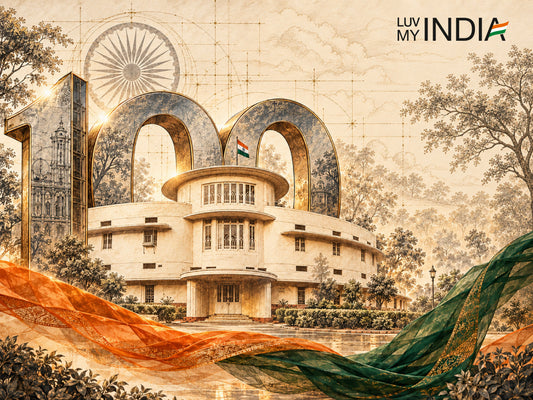
The idea goes back to 1947, when a newly independent India was still trying to imagine how governance would hold itself together. At Metcalfe House in Delhi, Sardar Vallabhbhai Patel addressed the first batch of civil service officers. He didn’t speak in praise. He spoke in responsibility. He called them the “steel frame of India,” not as decoration but as expectation. A structure that would have to carry the weight of a nation still finding its shape.
Because steel is never tested in comfort. It is tested in pressure.
And that pressure, decades later, has only multiplied.
In a drought-hit district, a collector ensures water reaches villages before crisis turns into collapse. In a remote block, files move through long nights so that a policy quietly becomes food, education, healthcare, something tangible in someone’s life. A police officer stands between order and uncertainty, often without recognition and often without pause. These are not extraordinary events in their world. They are routine. And that is what makes them extraordinary in ours.
Most of it never becomes visible. It rarely becomes a story. But it becomes continuity.
Because governance in India is not a distant machine. It is an everyday negotiation between intent and reality. And those within it live that negotiation constantly in meetings that stretch late, in field visits under unforgiving conditions, and in decisions that are questioned as soon as they are made, yet still have to be carried forward the next morning.
There is little comfort in that rhythm. Only endurance.
That is why Patel’s phrase still holds weight, “steel frame.” Not because it sounds strong, but because it demands strength in silence. Steel does not matter when it shines. It matters when it holds.
National Civil Services Day is not about celebrating an institution from a distance. It is about recognizing the unseen spine of governance, the quiet systems that reach into daily life without ever announcing themselves. The ration that arrives, the school that opens, the grievance that is heard, the disruption that is contained before it spreads.
India, in its lived reality, is often less about grand declarations and more about continuous maintenance.
And somewhere in that maintenance lies a deeper idea of belonging. A reminder that the country we often feel pride for is also held together by people we rarely see and processes we rarely notice, yet depend on completely.
At Luv My India, that understanding sits at the centre. Loving this country is not only about its moments of scale or celebration, but also about acknowledging the quiet commitment that keeps it steady. The work that does not ask to be seen but ensures everything else can be.
Because India is not only remembered for what it achieves.
It is sustained by what continues quietly every single day.
And those who continue it are part of the reason it holds together at all.
Tags:
Previous
Delhi Takes a Step Forward with Its First All-Women Police Station
Next
India - New Zealand Trade Deal: A New Chapter of Global Opportunity