Some men fight battles.
Some men change what a battle means.
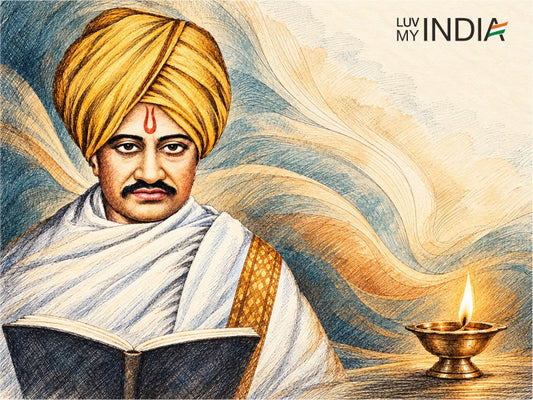
Hari Singh Nalwa was not just a general in the army of Maharaja Ranjit Singh. He was the line that held when everything else seemed uncertain.
Born in 1791 in Gujranwala, his story did not begin with power. It began with loss. Losing his father early meant growing up with a certain hardness, a certain clarity about the world. But what set him apart was not just resilience. It was the refusal to be intimidated by anything that stood in his way.
When he entered the court of Maharaja Ranjit Singh, he was young, but there was already something unshakeable about him. Not loud, not performative. Just a quiet certainty.
And then came the moment that would turn into legend.
They say he once came face to face with a tiger during a hunt. What followed was not instinct alone, but sheer will. As the animal lunged, he forced its jaws apart and brought it down with his sword. From that day, he was no longer just Hari Singh. He became Nalwa. He became Baaghmaar. The man who could look fear in the eye and not step back.
But the real battles he was meant for were not in the wild.
They were at the frontier.
At a time when invasions from the northwest were relentless, when the land lived under constant threat, most chose to defend. Nalwa chose to advance. He led campaigns across Kasur, Multan, Kashmir and Peshawar, territories that had long resisted stability. He did not just fight wars. He changed the direction of them.
Under his command, the frontier moved beyond the Indus, right up to the mouth of the Khyber Pass. A passage that had, for centuries, been an entry point for invaders finally met resistance that would not yield.
But what made him truly formidable was not just how he fought.
It was what he built after.
In Peshawar, a region known for unrest, he brought order. Not just through strength, but through structure. He strengthened administration, enabled trade and founded Haripur, a planned town that reflected foresight, not force. He understood something rare. That the true mark of power is not just victory, but stability.
And then came Jamrud.
In 1837, at the edge of the Khyber Pass, he faced one of the fiercest battles of his life. He was outnumbered. He was wounded. But stepping back was never an option.
Even as his strength began to fade, his resolve did not. He continued to lead, to hold the line, to stand where it mattered most.
By the time the battle ended, Hari Singh Nalwa was gone.
But the frontier he protected still stood.
And that is what makes his story endure.
He did not just defend a boundary.
He became it.
There are names that live in history books.
And then there are names that live in memory, in whispers, in the quiet pride of a nation.
Hari Singh Nalwa is one of them.
And this is where it comes home for us.
At Luv My India, we believe pride is not always loud. Sometimes, it lives in the stories we choose to remember. In the people who stood firm so that everything behind them could stand strong.
India is not just built by moments.
It is built by men and women who refused to move when it mattered most.
Baaghmaar was one of them.
And maybe that is what loving India truly means.
To remember. To carry forward.
And to stand just as firmly, in our own way.
Tags:
Previous
India - New Zealand Trade Deal: A New Chapter of Global Opportunity
Next
While We Asked “Bada Hokar Kya Banoge?”, An Indian Kid Answered It at 7