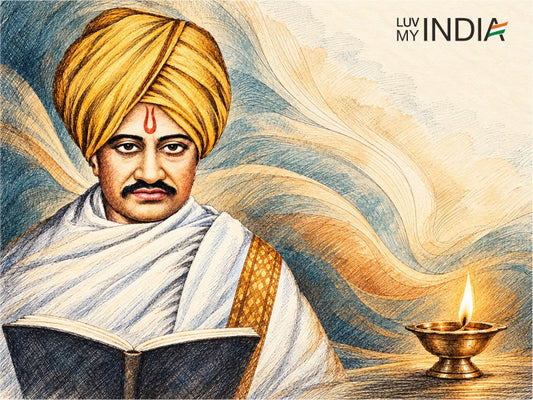
On a crisp dawn, over 150 years ago, Bankim Chandra Chattopadhyay sat with pen in hand and crafted verses that would - decades later - become the heartbeat of a freedom movement. Vande Mataram - “I bow to thee, Mother” - was not just a song; it was an invocation of love, courage and an unbreakable bond between a people and their land.
For generations since, those opening two stanzas echoed across bazaars, congress halls, and fields where freedom fighters once marched. But the six-stanza original - rich with imagery of rivers, mountains, strength, struggle, even the divine mother - had largely receded into memory. India’s first Prime Minister chose, in a different context, to sing only part of this ode to keep it broadly acceptable to all communities.
A New Chapter in the Song’s Life
In February 2026, the Union Home Ministry issued a directive that is as symbolic as it is ceremonial. Across official functions and school assemblies, whenever Vande Mataram and the National Anthem Jana Gana Mana are to be sung together, all six stanzas of the National Song must now be performed first, in full, before the anthem. The official rendition - lasting just over three minutes - is to be heard in the arrival of dignitaries, flag hoisting ceremonies, presidential addresses, and even morning school gatherings.
More Than Rules - A Rediscovery
Why does this matter? Because Vande Mataram is not just music. It carries layers of history - from its 19th-century origin, through its role during the Independence movement, to its controversial place in the early years of our Republic. The decision to restore the full six stanzas is a deliberate choice: an attempt to honour the original spirit and holistic beauty of a song that once rallied a nation.
To some, this feels like a long-overdue salute to our cultural heritage. To others, it’s stirred debates - about inclusion, about what it means to honour symbols in a diverse country. These conversations are part of the evolving story of who we are and how we choose to remember our past.
Standing Together, Word by Word
There’s poetry in the idea that the national song should come before the anthem - that we pause, reflect, breathe in the words that speak of Maa Bharat before rising in salute to the ideals that bind us together. As the guidelines state, audiences must stand in attention whenever the full version is performed - a physical gesture of respect that mirrors an emotional commitment.
This isn’t just a bureaucratic shift. For many young Indians, this may be their first encounter with the full sweep of Vande Mataram. For elders, it might be a moment of nostalgia - echoing the struggle songs of youth, shared at rallies, in classrooms, at historic anniversaries.
A Song, A Story, A Shared Horizon
At Luv My India, we always believe that patriotism is best expressed not in slogans, but in shared experiences that bind us emotionally to our land and to one another. Vande Mataram - in all its lyrical breadth - is one such shared experience. Its revival in full is not about politics alone; it’s about hearing every nuance of a song that once helped define our spirit.
Let’s celebrate that resurgence - not just as a rule in a gazette, but as a reminder that the Motherland we sing to is, in countless ways, the same land our forebears lived for, dreamed for, and fought for.
Tags:
Previous
Sarojini Naidu: The Nightingale Who Refused to Whisper
Next
How Cricket Built India’s Global Identity: From Underdog to World Force