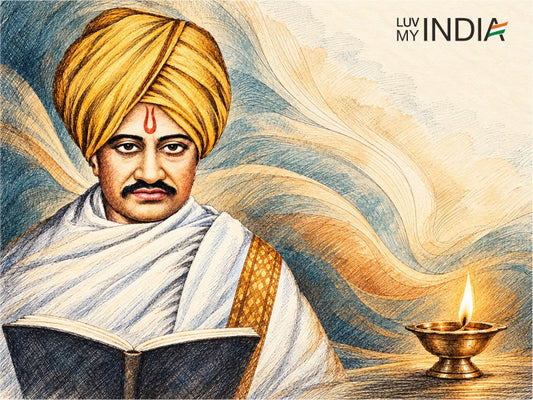
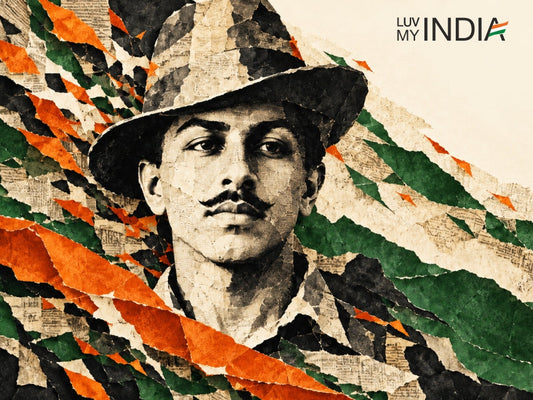
History often remembers freedom through dates and declarations. But India’s independence was truly shaped by individuals whose courage burned brighter than fear itself. Among them stood Chandra Shekhar Azad - a revolutionary who did not merely fight for freedom; he lived it, and ultimately chose death over surrender.
His story reads less like history and more like legend.
Born in 1906 in Bhavra, a small village in present-day Madhya Pradesh, Chandra Shekhar Tiwari grew up witnessing the everyday humiliation Indians faced under British rule. The atmosphere of resistance was slowly building across the country, and even as a teenager, Azad felt its pull.
At just fifteen years old, he joined Mahatma Gandhi’s Non-Cooperation Movement. Arrested during a protest, the young boy stood fearlessly before a British magistrate. What followed became one of the most defining moments in India’s revolutionary history.
When asked his name, he replied, “Azad.”
Father’s name? “Swatantrata.”
Residence? “Jail.”
Infuriated, the British sentenced him to public flogging. With every lash, the young revolutionary shouted “Vande Mataram.” The punishment was meant to break him - instead, it created Chandra Shekhar Azad, a name that would soon echo across the freedom struggle.
Unlike many leaders who worked through political negotiation, Azad believed that resistance also required bold revolutionary action. He became deeply involved with the Hindustan Republican Association (HRA), collaborating with iconic revolutionaries such as Bhagat Singh, Ram Prasad Bismil, and Ashfaqulla Khan.
After the Kakori Train Action in 1925 led to severe crackdowns and executions, the revolutionary movement faced near collapse. It was Azad who stepped forward to reorganize and rebuild it. Under his leadership, the group transformed into the Hindustan Socialist Republican Association (HSRA), inspiring a new generation of young Indians willing to risk everything for independence.
Azad lived a life constantly on the move - mastering disguises, training revolutionaries, and planning resistance while remaining one of the most wanted men in British India. Despite relentless pursuit, the British could never capture him.
Because Azad had made a vow: he would never be taken alive.
That promise was tested on February 27, 1931, at Alfred Park in Allahabad. Betrayed and surrounded by armed British forces, Azad found himself alone in a fierce gun battle. Outnumbered but unshaken, he fought bravely, ensuring his companion escaped safely.
When only one bullet remained and capture became inevitable, Azad chose freedom one final time.
He fired the last bullet at himself.
At just 24 years old, Chandra Shekhar Azad fulfilled the meaning of his name - remaining Azad till his final breath.
His life continues to inspire because it represents uncompromising courage. Azad was not driven by fame or power; he was driven by an unwavering belief that India deserved dignity, identity, and self-respect. The freedom we experience today carries echoes of sacrifices made by young revolutionaries like him who chose nation over self.
Luv My India honours the courageous revolutionaries who sacrificed their lives to give us the free nation we proudly live in today. Their bravery laid the foundation for the India we celebrate now - an India where we honour our heritage, wear our identity with confidence, and keep the stories of our heroes alive for generations to come.
Tags:
Previous
From Indian Kitchens to Michelin Stars: The Global Rise of India on a Plate
Next
The Many Faces of Holi in India