Some men follow the tides. A rare few turn them.
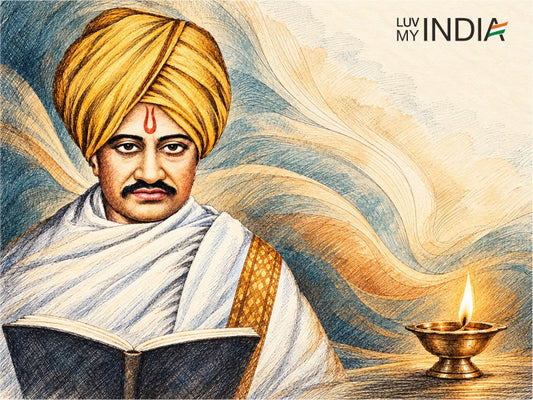
On 8 October 1911, in the small town of Chingleput in the Madras Presidency, a boy was born who would one day stand on the bridge of a free nation's Navy and raise an Indian flag where only British flags had flown. Today, on Admiral Ram Dass Katari's birth anniversary, India salutes the first Indian Chief of the Naval Staff - the man who made a young republic believe that the oceans around it could truly be its own.
Katari grew up in Hyderabad, studying at Mahbub College High School and Nizam College. His father was an assistant civil engineer. There was no naval legacy to inherit, no admiral in the family to open doors. Yet in 1927, he was among the very first batch of Indian cadets to board the Training Ship Dufferin. He topped the entrance examination and walked out with the Viceroy's Gold Medal.
That was the first flame he lit. Many more would follow.
Before he commanded fleets, he charted rivers, surveying the shifting bed of the Hooghly for the Calcutta Port Commissioners. When the Second World War broke out, he joined the Royal Indian Naval Reserve in 1939, beginning as the most junior officer aboard the patrol vessel HMIS Sandoway. He mastered anti-submarine warfare, trained young sailors, and by war's end commanded HMIS Cauvery, clearing deadly mines from the waters of the Andaman and Nicobar Islands.
Then came 1947. Freedom arrived, and with it, fragility. As Junagadh's future hung in the balance, Commander Katari, aboard HMIS Kistna, led the naval force guarding the Kathiawar coast. A year later, he was second-in-command of INS Delhi, the proud new flagship of independent India.
Read the record of Admiral R.D. Katari and it feels like a row of lamps lit along a dark shore:
- First Indian naval officer at the Imperial Defence College, London (1953)
- First Indian to officiate as Commander-in-Chief of the Navy (1954)
- First Indian promoted to flag rank in the Navy (1956)
- First Indian to command the Indian Fleet (1956)
- First Indian Chief of the Naval Staff (22 April 1958)
Every "first" was a door forced open, not for himself, but for every Indian sailor who would walk through it after him.
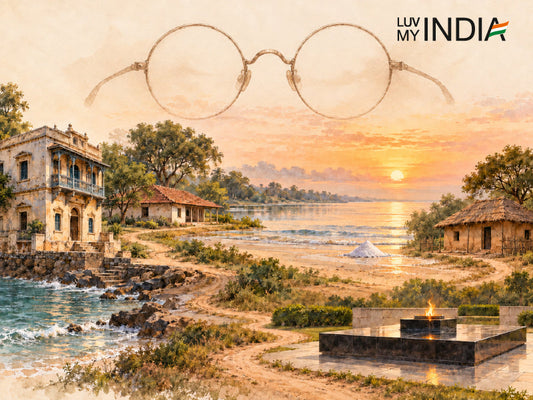
In his memoir, A Sailor Remembers, the Admiral recalls a choice that reveals the soul of the man. When he was to take command of the Indian Fleet, he asked that the ceremony be held on 2 October, Gandhi Jayanti. And so, at 8 a.m. on 2 October 1956, aboard INS Delhi in Mumbai, his flag was hoisted. The fleet passed into Indian hands on the birthday of the Father of the Nation.
No speech could have said it better. Freedom on land had found its echo at sea.
As Chief of the Naval Staff from 1958 to 1962, Admiral Katari shaped the framework of India's maritime security strategy. Under his watch, INS Vikrant, India's first aircraft carrier, was commissioned in 1961. That December, he led the Navy through the Liberation of Goa, ending over four centuries of Portuguese rule. He also served as Chairman of the Chiefs of Staff Committee.
The vision that runs through A Sailor Remembers is of a three-dimensional Navy anchored in self-sufficiency, integrity, discipline and first-rate leadership. Long before self-reliance became a national mission, he was charting it on the waves.
Retirement never meant rest. He chaired the Andhra Pradesh State Road Transport Corporation, and served as India's Ambassador to Burma from 1964 to 1969. In a delightful twist, he was also the first setter of The Hindu's crossword, compiling puzzles until his final days. In 1980, he was conferred the honorary rank of full Admiral.
He sailed on from this world in Secunderabad on 21 January 1983, soon after his memoir reached readers. Yet his wake still shines: the cadets' dining hall at the Indian Naval Academy carries his name, the Admiral R.D. Katari Trophy crowns the top Sub Lieutenant in every course, Katari Bagh stands in Kochi, and the annual Admiral R.D. Katari Memorial Lecture keeps his ideas alive. Fittingly, his own flag lieutenant and son-in-law, Admiral L. Ramdas, would one day lead the Navy too.
Today, when Indian warships patrol distant oceans and INS Vikrant sails again as a proud, homegrown carrier, every one of those decks rests on foundations Admiral Ram Dass Katari laid. He took command of a Navy that had only just become India's, and he gave it an Indian heart.
To the boy from Chingleput who became the first Indian to steer our Navy, to the sailor who chose Gandhi Jayanti to raise his flag, to the leader who lit flame after flame so that others could find their way: Luv My India salutes you. On your birth anniversary, a grateful nation stands at attention and says, with full heart and full voice, thank you, Admiral.
The sea remembers. And so will India.
Tags: