Last night, India slept under the glow of Sharad Purnima, with bowls of kheer set out beneath the moon. This morning, as that full moon gave way to daylight, somewhere a child sat on a grandparent’s lap and asked, “Who wrote the Ramayana?”
The answer is the story of Valmiki Jayanti, celebrated today, 26th October. It may be the most hopeful story our country has ever told about itself.
Long before he was Maharishi Valmiki, he was Ratnakara, a man who took what wasn’t his. Tradition says he waited on forest paths to rob travellers, believing he did it for his family’s sake.
One day he stopped the sage Narada and asked a simple question: “Will your family share the weight of your sins, the way they share your earnings?”
Ratnakara went home and asked. His wife, his parents and his children all gave the same gentle, devastating answer: no. Each person carries their own deeds.
Something in him broke open. He sat down to meditate, repeating the name of Rama, and stayed so long and so still that an anthill, a valmika, grew around him. When he rose, the world called him Valmiki, the one born of the anthill. The man who had stolen from travellers had become a seer.
One morning, as the sage walked to the river, he saw a hunter’s arrow strike a bird mid-love, leaving its mate crying out. Valmiki’s heart shook. Words rose from his sorrow in a rhythm he had never heard, in perfect metre, almost like a song.
This is how Indian tradition remembers the birth of the shloka, and why he is honoured as Adi Kavi, the first poet of India. Our oldest poetry did not begin with kings or conquests. It began with compassion for a wounded bird.
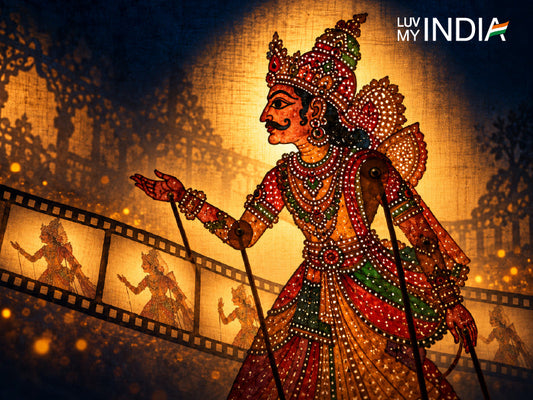
The Valmiki Ramayana, with about 24,000 verses across seven kandas, became the story that taught generations what dharma looks like when it is hard. It follows a prince who keeps his father’s word, a wife who walks into the forest by choice, and a brother who gives up comfort for love.
It is one reason Ramlila stages light up our nights every Dussehra. It is why a village grandmother and a Bengaluru software engineer can both hum a line from the Ramayana without knowing where they learned it. Across Thailand, Indonesia and Cambodia, the epic travelled further than any army ever did. Few works have shaped Indian culture so deeply.
This is the part that makes the story personal. When Sita was sent away, it was Valmiki who opened the doors of his ashram, giving her shelter, dignity and safety. There, her sons Luv and Kush were born. Valmiki taught them every verse of the epic he had composed, and the boys sang it aloud in Rama’s own court.
Think about that. In an age when a woman could be cast out, one sage said: you are not alone, you are under my protection. The first poet of India was also its first great protector of the voiceless. And in that ashram, two boys, Luv and Kush, grew up on the verses of the Ramayana and the quiet courage of their mother. When they finally sang that story aloud, they were not just reciting an epic. They were bringing their mother’s dignity home.
Celebrated on Ashwin Purnima, the same full moon that lit up Sharad Purnima night, Valmiki Jayanti, also called Pragat Diwas, fills temples, processions and community gatherings across the country. It holds special meaning for the Valmiki community, who see in their patron sage a living proof that no one is born beyond redemption.
In a world quick to judge people by their worst chapter, this Valmiki Jayanti message is quietly revolutionary. Ratnakara’s past did not decide his future, and neither does yours.
For young Indians scrolling through endless noise, there is something worth carrying: the idea that change is always possible, and that your pain can become your purpose. For elders who grew up hearing the Ramayana every evening, today is a chance to pass the story down, because stories are the only inheritance that grows when shared.
How to Celebrate Today
- Read a few verses of the Valmiki Ramayana, or tell the story of Ratnakara to a child.
- Light a diya at dusk, as the moon, still bright from last night’s Purnima, rises over your home.
- Visit a Valmiki temple or join a community celebration near you.
- Share the story with someone who feels they have lost their way.
Somewhere in every one of us there is a Ratnakara and a Valmiki, the person we were and the person we can become. India has believed in that second person for thousands of years.
Happy Valmiki Jayanti, from all of us at Luv My India.
Tags:
Previous
Asian Games 2026: 85 Medals, a 44-Year Wait Ended, and India at Its Fiercest
Next
Indian Defence T-Shirts That Salute Our Armed Forces