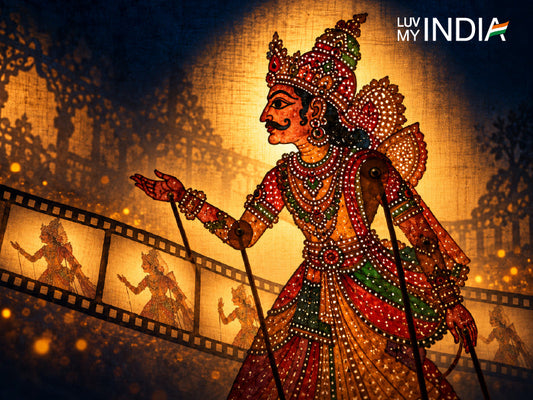
Sikandar is a 1941 Hindi-Urdu historical epic directed and produced by Sohrab Modi under his Minerva Movietone banner. It dramatises Alexander the Great’s 326 BC advance to the Jhelum and his clash with King Porus. Prithviraj Kapoor played Alexander; Modi played Porus. Though it passed the censors, it was reportedly banned in some British Indian Army cantonments, which says everything about how it was read.
Colonial censorship meant no filmmaker could name the Raj. So Modi did what clever dissenters do: he hid the present inside the past. Film writers describe his trilogy, Pukar (1939), Sikandar (1941) and Prithvi Vallabh (1943), as covertly nationalistic dramas in the guise of historicals.
Study the architecture. A foreign power storms the frontier. Porus urges neighbouring kingdoms to unite against a common enemy, while rivals like Ambhi of Taxila waver. In a country moving toward Quit India, that message needed no footnote. The audience did the translation.
Here Modi was subtler than any slogan-maker. Scholars note that Alexander is no cartoon villain. He is magnificent and flawed: proud, deaf to Aristotle’s warnings, undone by vanity. The moral centre belongs to Porus, who loses the battle but wins the argument on dignity, and is freed for his valour and wit. Defeat without surrender is the real nationalist lesson.
Patriotism travelled because it was entertainment. Battle scenes were shot around Kolhapur with hundreds of extras, horses and elephants, on a scale Indian audiences had rarely seen. Pandit Sudarshan’s dialogue crackled, and Kapoor and Modi, both steeped in theatre, traded speeches like sword blows. Modi, a Parsi stage veteran who had already brought Shakespeare to Indian screens with Khoon Ka Khoon (1935), knew that people carry home what thrills them. Then he made them think.
Modi’s gift to India was confidence: the belief that our own history deserved grandeur on the big screen, and that cinema could hold a mirror to a nation’s aspirations. He followed with Jhansi Ki Rani (1953), India’s first Technicolor film, with technicians flown in from Hollywood, the story of a queen who took up arms against the British. Mirza Ghalib (1954) won the President’s Gold Medal. In 1980 he received the Dadasaheb Phalke Award, India’s highest honour in cinema. Long before Baahubali and Ponniyin Selvan filled theatres, Modi proved that Indian audiences would crowd in for history told on a grand scale. Sikandar even returned as the colour remake Sikandar-E-Azam (1965), again with Prithviraj Kapoor. Every patriotic Indian epic since walks a road he paved.
We can see Sikandar as proof of a simple truth: patriotism is not only shouted, it is watched, worn and passed on. Modi could not say “freedom” aloud, so he wrapped it in story, and a nation understood. Today we are free to say it loudly, and to wear it proudly. Every Luv My India tee, flag and keepsake is a descendant of that coded cry: pride you can carry. Modi taught us that love for India shows best when it is courageous, united and beautifully made.
Sohrab Modi left us on 28 January 1984, aged 86. He built a studio, a style and a spine for Indian cinema. Thank you, Modi sahab, for teaching a nation to look at its past and see its future. If you have never seen Sikandar, find it and watch it with your parents or grandparents. You will be watching how India once whispered the word freedom.
Tags: