The sea is restless. Temple bells cut through the salty air. A young boy steps out quietly, careful not to wake the house. He carries a bundle of newspapers tucked under his arm. His feet know the lanes by memory.
This is not a scene from a new small-town movie. This is just another morning in the life of a boy named A. P. J. Abdul Kalam.
In that small house near the shore, life is simple. Money is limited. Expectations are not. His father believes deeply in discipline and prayer. His mother believes in feeding whoever arrives hungry.
By the time the sun climbs higher, the newspapers are delivered. School awaits. So does curiosity. Kalam listens more than he speaks. He watches birds more than people. He is fascinated by flight, not just planes but the idea that something heavier than air can rise if shaped right.
When he enters aerospace engineering, it feels like stepping closer to the sky he has been watching all his life. And yet, reality does not reward him instantly. His early years in India’s space and defence programmes are marked by pressure, expectations and long hours where the success is still very distant.
Then comes the moment that almost defines him: the SLV-3 failure. The launch fails and the nation watches. As project leader, Kalam stands there. It would have been easy to explain. Easier to deflect. He does neither. He takes responsibility fully. The weight is his to carry. When the mission later succeeds, Kalam steps back. He lets his team step forward. Applause belongs to them, he says. Failure was his.
Years pass. Missiles are developed. Systems strengthen. India moves from dependence to self-reliance in critical technologies. Kalam becomes known not as a loud scientist, but as a steady one. He speaks of strength, but never of aggression. For him, science is service. And then, something unexpected happens.
His name begins to surface not for another mission, not for another laboratory, but for the highest constitutional office in the country: The President of India.
Kalam does not seek it. He does not campaign for it. In fact, he resists the idea. He is a teacher at heart. A scientist by temperament. Power does not excite him. Authority does not attract him.
The story goes that he even asks whether he can continue teaching if he accepts. Whether he can remain accessible. Whether he can still be himself.
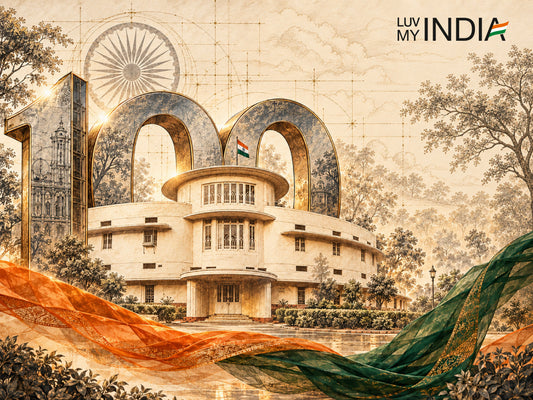
Rashtrapati Bhavan, with its grand corridors and protocol-heavy traditions, could have transformed anyone. It didn’t transform Kalam. Instead, he transformed the space. He opened its gates to students. He answered emails personally. He encouraged questions instead of authority. He reminded the nation that leadership does not require distance — it requires integrity.
For the youth of India, Kalam became something rare: a public figure who listened. He didn’t talk down. He didn’t preach. He spoke in a language of possibility. He believed young people were not the problem to be managed, but the solution to be trusted. And young people felt that trust instantly.
One of the most powerful things about Kalam was his consistency. Whether addressing scientists, students or world leaders, the tone never changed. He carried the same discipline from Rameswaram into Rashtrapati Bhavan, proving that success doesn’t require reinvention of values.
Even after his presidency ended, Kalam did not retire into comfort. He returned to classrooms, auditoriums and lecture halls. He remained restless for impact. His last moments were spent doing exactly what he loved most: teaching. There is something profoundly poetic about a man whose life began with learning and ended with sharing knowledge.
What makes Kalam’s journey so powerful for first-time readers, especially youth, is that it doesn’t feel unattainable. He didn’t inherit privilege. He didn’t chase fame. He didn’t rely on shortcuts. His life was built on habits of reading, reflection, discipline and humility.
From Rameswaram to Rashtrapati Bhavan is not just a physical journey. It is a moral one. It tells young Indians that background does not limit destiny. That simplicity is not weakness. That intelligence shines brightest when paired with humility.
Kalam didn’t just show India how to dream. He showed India how to work for those dreams patiently, ethically, relentlessly.
And perhaps that is why, even years later, his presence still feels close. Not like a statue. Not like a chapter. But like a mentor we keep returning to, especially when the path feels uncertain.
Tags:
Previous
Chanakya 2.0: Arthashastra Playbook for Gen Z
Next
Subhas Chandra Bose: the dream that terrified the empire