The drums are getting louder. A family carries its Ganpati towards the water, stopping for one last photograph. Someone calls out, “Ganpati Bappa Morya, pudhchya varshi lavkar ya!”- come back soon next year. There are smiles, and there are tears. A farewell in India rarely feels like only an ending.
This is Anant Chaturdashi, the fourteenth day of the waxing moon in the Hindu month of Bhadrapada. In 2026, it falls on Friday, 25 September. Many know it as the day of Ganesh Visarjan, when the largest celebrations of Ganeshotsav reach their close. But the name reveals another tradition: Ananta, the infinite form of Lord Vishnu, is worshipped on this day too.
While the streets prepare to bid Ganpati farewell, another ritual may be unfolding inside a home. A devotee observes the Anant Vrat, offers prayers to Vishnu and ties an Anant Sutra, a sacred thread traditionally made with 14 knots. One traditional interpretation sees those knots as the 14 worlds of Hindu cosmology. A small thread on the wrist becomes a reminder of something vast: life is larger than the difficulty we can see today.
There is a story behind that thread. In the Anant Chaturdashi vrat katha, Sushila takes up the observance, but her husband, the sage Kaundilya, dismisses and removes her sacred thread. After hardship follows, he searches for Ananta and eventually learns to approach the vow with humility. It is a devotional story, rather than a historical account, and its lesson travels easily beyond the ritual: faith deserves care, and pride can blind us to what sustains us.
If you are wondering whether the day has a Sanskrit mantra, a simple invocation used in Ananta worship is “ॐ अनन्ताय नमः” (Om Anantaya Namah) - a salutation to Ananta, the Infinite One. Families may follow different prayers and customs. The words matter, but so does the pause they invite: a moment to think about endurance, gratitude and the things we choose to keep close.
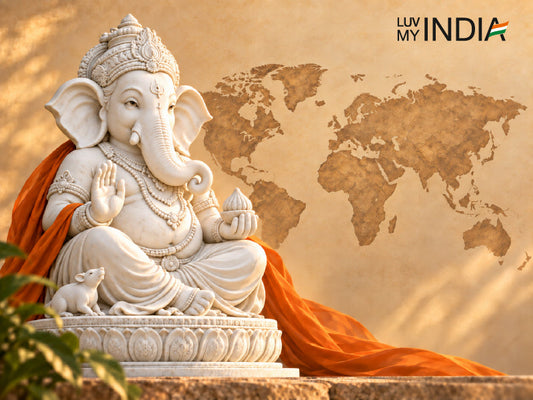
Outside, Ganpati’s procession tells another part of the story. The idol that was welcomed with such care is immersed in water after days of aarti, visits and shared meals. For devotees, the farewell is full of feeling because the welcome was real. “Come back soon” is a promise that the relationship will continue beyond the visible form. Households may immerse their idols earlier; Anant Chaturdashi is especially associated with the final day of the larger Ganeshotsav celebrations.
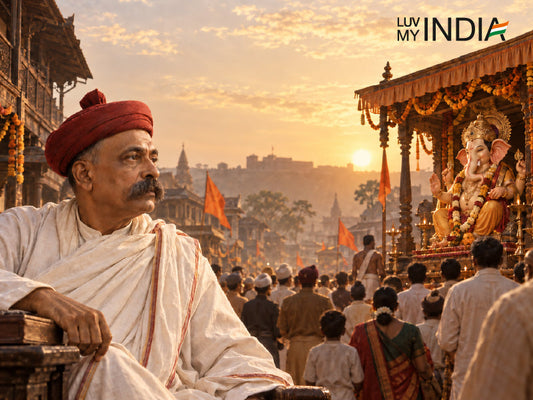
And here the festival enters India’s cultural history in a way that may surprise you. Ganesh worship existed long before the freedom movement. In the 1890s, Lokmanya Bal Gangadhar Tilak encouraged large public Ganesh celebrations and collective visarjan, helping turn a cherished religious occasion into a gathering place for people. Under colonial rule, public festivals could also create space to meet, speak and feel part of something bigger than one’s own household. Anant Chaturdashi’s processions still carry a trace of that shared public spirit.
That is what makes this day especially moving for us at Luv My India. Love for India lives in grand moments, but also in the neighbour who joins the aarti, the child learning a family prayer, and the people who make room for one another as a procession passes. Our traditions do not need everyone to experience them in exactly the same way. They give us a chance to recognise the stories we share - and to pass them on with care.
When the last drumbeat fades, the street will look familiar again. Yet something stays: the knot at the wrist, the memory of a gathering, the words pudhchya varshi lavkar ya. Perhaps that is the heart of Anant Chaturdashi. We learn to let a moment go without letting its meaning disappear.
At Luv My India, we celebrate that feeling beyond the festival calendar: the everyday pride of carrying India’s stories with us, wherever we go.
Tags: